Paid Ad Management: Boost Your Success 2025
Why Paid Ad Management Matters for Your Business
Paid ad management is the process of planning, creating, launching, and optimizing paid advertising campaigns across platforms like Google, Facebook, and other digital channels to drive measurable business results. It involves continuous monitoring, budget control, and strategic adjustments to maximize your return on investment.
Here’s what effective paid ad management includes:
- Strategic planning based on your business goals and target audience
- Campaign setup across the right advertising platforms
- Ad creation with compelling copy and visuals
- Budget management to control costs and maximize results
- Performance tracking using data and analytics
- Ongoing optimization to improve results over time
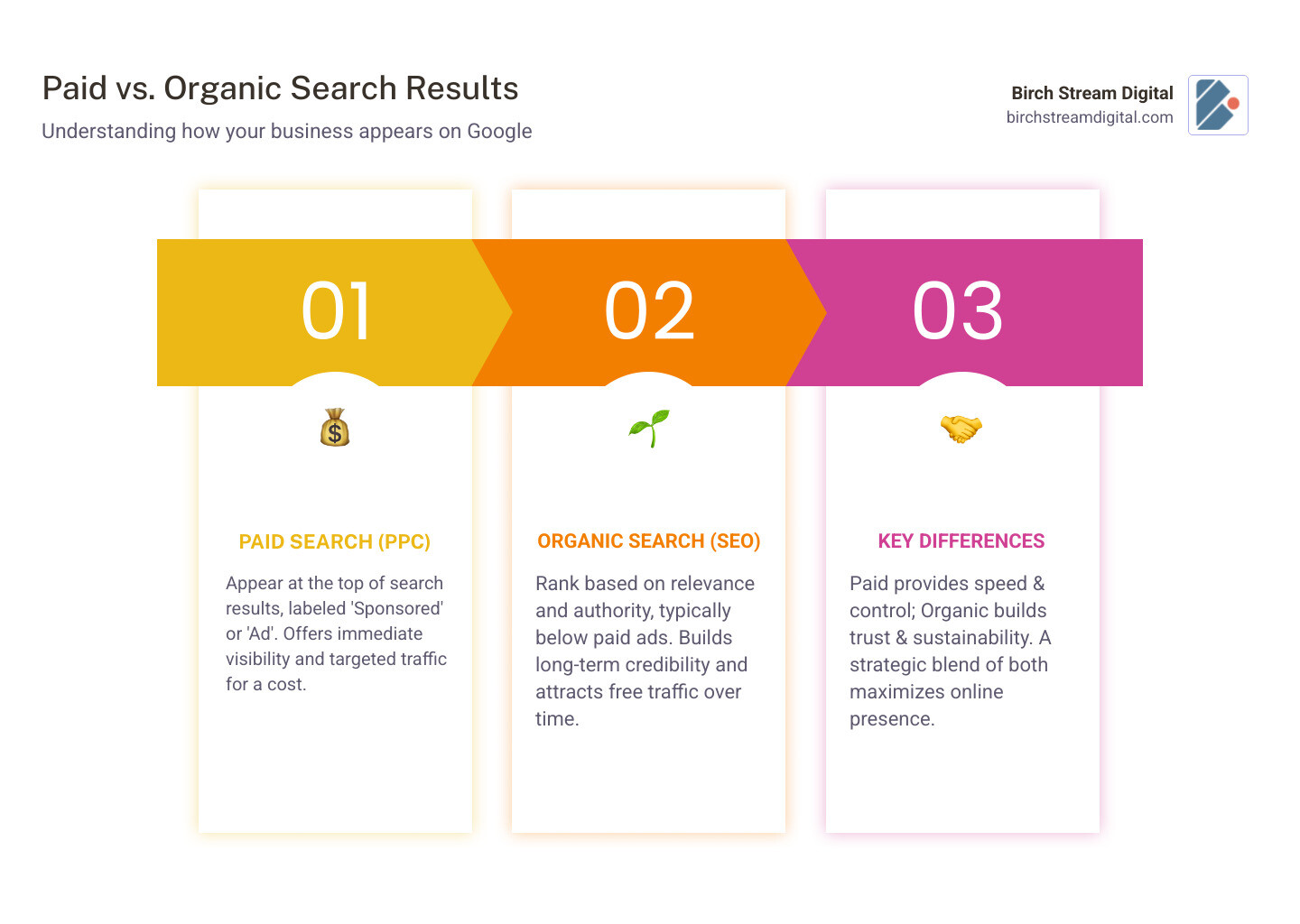
If you’ve ever wondered why your competitor appears at the top of Google search results, chances are they’re running a managed paid ad campaign. The truth is simple: organic marketing takes time. Paid advertising gets you in front of customers right now.
For small business owners in Winston-Salem and the Triad region, paid advertising can feel overwhelming. There are platforms to choose from, budgets to set, and results to track. But when done right, it’s one of the fastest ways to drive qualified traffic and measurable growth.
According to industry data, 80% of shoppers begin with a search. That means your potential customers are already looking for what you offer. Paid ad management helps you show up exactly when they’re ready to buy.
Common signs your ads need better management:
- > You’re getting clicks but very few leads or sales
- > You’re not sure which campaigns are actually profitable
- > Your ad spend feels random instead of planned
- > You only log into Google Ads when something looks wrong
The difference between a successful campaign and wasted budget comes down to strategy, execution, and continuous improvement. You don’t just set up ads and walk away. You test, measure, and refine based on real data.
This guide will walk you through everything you need to know about paid ad management, from understanding how it works to launching your first campaign and optimizing for long-term success.
Paid ad management further reading:
Understanding the Basics of Paid Advertising
Paid advertising is when you pay to show your message to the right people at the right time. Instead of waiting for organic traffic to build, you buy your way to the front of the line.
Think of it this way: organic marketing is like planting a garden. Paid advertising is like buying vegetables at the market. Both have their place, but paid ads deliver results today.
Most platforms like Google and Facebook use an auction system. You compete on how much you pay, but you also compete on relevance.
When someone in Winston-Salem searches for “bakery near me,” Google runs an auction. Advertisers bid to show up, but the highest bid doesn’t automatically win.
Google also considers Quality Score, which measures your ad’s relevance. A bakery with a well-written ad and a great landing page can pay less per click than a competitor with a higher bid but a poor campaign.
This bidding system rewards helpful ads. It’s not just about paying to play. It’s about paying to play well.
For businesses in the Triad region, this levels the playing field. You don’t need the biggest budget to compete. You need smart paid ad management and a clear understanding of your audience.
Want to learn more about how we approach this? Check out our Paid Advertising services.
How You Pay: Common Pricing Models
Understanding how you’re charged is important. Choosing the wrong payment model can waste your budget.
Pay Per Click (PPC) is the most common model. You pay only when someone clicks your ad, which is ideal for driving website traffic. Costs vary by industry, from a few dollars to over $50 per click in competitive markets.
Cost Per Acquisition (CPA) is a model focused on results. You pay only when a user completes a specific action, like a purchase or form submission. This ties your budget directly to conversions.
Cost Per View (CPV) is for video ads. You pay when someone watches your video, often for at least 30 seconds. YouTube uses this model, and costs can be just pennies per view.
The right pricing model depends on your goals. Good paid ad management means matching the model to your objectives and maintaining tight budget control.
The Benefits for Your Business
For many businesses in Winston-Salem, paid ads are the fastest path to growth. Here’s why.
Fast traffic is the most obvious benefit. You can launch a campaign and see visitors on your site within hours. This is perfect for new product launches, promotions, or quick lead generation.
Precise audience targeting is a key advantage. Instead of hoping the right people see your ad, you can target specific demographics and behaviors. For example, you can reach homeowners in Greensboro who recently searched for kitchen remodeling.
Measurable ROI lets you know what’s working. Every click and conversion is tracked, showing you exactly what you get for your ad spend. No more guessing.
Increased brand awareness is another benefit. Seeing your business name repeatedly builds recognition and trust. Even if people don’t click, a simple display ad campaign can keep your business top of mind.
Competing in crowded markets often requires paid advertising. Organic results take time, and top spots on Google are often paid ads. If your competitors are running ads and you are not, you’re missing out on potential customers.
As digital marketing expert Iñigo Rivero points out, “Google Ads are still king for campaigns driven by intent.” When someone searches for exactly what you offer, showing up at that moment is priceless. Learn more about why the top Google result is often a paid ad.
Paid advertising isn’t just for big corporations. When managed well, it’s one of the most effective tools for small businesses looking to grow.
How to Build and Launch a Successful Paid Ad Campaign
A successful paid ad campaign is not about luck. It is a structured process that leads to measurable results.
Think of it like building a house. You start with a solid foundation and follow a clear plan. Paid ad management works the same way.

The following steps cover everything from goal setting to campaign launch. Skipping a step can lead to wasted budget and missed opportunities.
Your 3-Step Paid Ad Management Plan
- > Clarify the goal – What result are we buying? (Leads, sales, appointments)
- > Launch a focused test – Start small, with clear tracking in place.
- > Measure and refine – Keep what’s working, cut what isn’t, then scale.
Step 1: Define Your Goals and Know Your Audience
Before you write a single ad, you need clarity. What are you trying to achieve, and who are you trying to reach? Running ads without a clear goal is like driving without a destination.
Start with your business objectives. Do you want more traffic, leads, or sales? Your objective shapes every decision.
We encourage setting SMART goals: Specific, Measurable, Achievable, Relevant, and Time bound. Instead of “get more leads,” a better goal is “increase qualified leads by 20% in the next three months.”
Next, consider your customer’s buyer’s journey. Are they just starting to research, or are they ready to buy? This helps you tailor your message.
Building customer personas is also valuable. Create profiles of your ideal customers, including their demographics, challenges, and online habits. The more you know, the better you can target.
As Nicole Silver, director of marketing at Superpower Social, puts it: “Understand how your audience thinks and what roles each channel plays in their lifestyle to determine what types of ads work best on each individual channel.”
For businesses in the Triad, local targeting is incredibly powerful. We can focus your ads on specific zip codes, cities, or a radius around your business.
Step 2: Choose the Right Advertising Channels
With clear goals and an audience in mind, it’s time to choose where your ads will appear.
Search ads appear on Google Ads and Microsoft Advertising when people search for your keywords. They are fantastic for capturing users with high intent. A search for “best Italian restaurant” in Winston-Salem can put your ad at the top. For more on this, see our Paid Search Management services.
Display ads are visual banners you see across websites and apps. They work well for brand awareness and for reminding previous visitors about your business.
Social media ads on platforms like Meta Ads (Facebook and Instagram), Pinterest Ads, TikTok Ads, and LinkedIn Ads offer precise targeting. LinkedIn is invaluable for B2B, while Pinterest is great for products that inspire purchases.
Video ads on platforms like YouTube Ads are highly effective for brand recall and showing your products in action. YouTube has over 2.5 billion users.
Retargeting ads target users who have already interacted with your business, like visiting your site. These ads gently nudge people back to complete an action. Platforms like AdRoll specialize in this. As digital marketer Kelly Redican suggests, you can use GA4 data to “find your customer purchase timeline” and apply this to remarketing.
The best strategy often uses multiple channels working together.
Step 3: Create Compelling Ad Copy and Creatives
Your ads must stand out and inspire action.
Start with a strong hook to grab attention. A question like “Tired of high energy bills?” works better than a simple statement like “We sell HVAC systems.”
Communicate your value proposition. What makes you unique? For a local HVAC company, this could be 24/7 emergency service in Greensboro.
Every ad needs a clear call to action (CTA). Tell people exactly what to do next, like “Shop Now” or “Get a Free Quote.”
A/B testing is critical for effective paid ad management. Create multiple ad versions and test them to see what performs best. Small changes can make a big difference.
Your visuals must be high quality and engaging. They should be relevant and consistent with your brand.
Your landing page must deliver on the ad’s promise. If your ad says “Get 20% off,” the landing page must show that offer clearly.
Finally, set up tracking before you launch. Install pixels, set up conversion tracking, and connect your analytics. Without proper tracking, you’re flying blind.
Building a successful campaign takes time and attention, but following these steps sets you up for measurable growth.
Mastering Ongoing Paid Ad Management
Launching an ad campaign is the easy part. The real work begins after your ads go live.
Effective paid ad management is a continuous cycle of watching, learning, and improving. It involves analyzing data, adjusting budgets, and testing new approaches.
It’s like tending a garden. You plant the seeds, then you need to water, weed, and adjust based on what’s growing. The same is true for your ad campaigns.
A common challenge is ad fatigue. This happens when your audience sees the same ad too often and starts ignoring it, causing click through rates to drop and costs to rise. The solution is to refresh your creative regularly.
Budget management is another ongoing concern. You need to know when to spend more on what’s working and when to cut back on what is not. This requires looking at your data regularly.
How to Measure the Success of Your Paid Ad Management
You cannot improve what you do not measure. Tracking the right metrics is essential.
Every campaign should have Key Performance Indicators (KPIs) tied to your business goals. For sales, your KPIs might be conversion rate and revenue. For brand awareness, you would focus on impressions and reach.
Return on Ad Spend (ROAS) is a critical metric. It tells you how much revenue you earn for every dollar you spend on ads. A ROAS of 4:1 means you are making $4 for every $1 spent.
Your conversion rate is the percentage of people who click your ad and take the desired action. A low conversion rate often points to issues with your landing page or offer, not necessarily your ad.
Click Through Rate (CTR) is how often people click your ad after seeing it. A strong CTR suggests your ad and targeting are relevant. A low CTR means it’s time to test new copy or visuals.
Tools like Google Analytics show you what happens after someone clicks your ad. This context helps you understand the real impact of your campaigns.
Paid ads and SEO complement each other well. Learn more about how SEO and PPC work together for better results.
Optimizing Your Budget and Overcoming Problems
Even campaigns that are planned well hit roadblocks. How you respond makes all the difference.
Budget allocation requires constant attention. As Google Ads manager Chelsea Harding advises, “If you’re a small ecommerce brand, start with your top converting products.” Focus on what already works, then expand.
Jaimon Hancock of Adalystic Marketing agrees: “Double down on what’s already converting while internally workshopping the weaker offer.” Invest in your winners while you improve everything else.
Scaling campaigns is about strategic growth. Once an ad delivers consistent results, you can gradually increase its budget, watching your metrics to ensure performance stays strong.
Low ad rank is a frustrating problem where your ads do not show up prominently. This is often due to low Quality Score or weak bids. We fix this by improving ad relevance, adjusting bids, and ensuring your landing page matches the ad’s promise.
Negative keywords are a powerful tool in search advertising. They tell Google which searches to avoid. For example, a premium restaurant in Winston-Salem would add “cheap” as a negative keyword to prevent wasted clicks.
The advertising landscape is always changing. AI and machine learning now help optimize campaigns, but they still need human strategy to work well. We use AI as a tool, not a replacement for thoughtful paid ad management.
Staying current with trends like video content and privacy changes is also important. We keep up with these shifts so your campaigns stay effective.
Managing paid ads well requires attention, expertise, and time. That’s why many businesses in the Triad region partner with an agency.
Frequently Asked Questions about Paid Advertising
We’ve worked with dozens of small businesses in Winston-Salem and the Triad region. These are the questions that come up most often when we start talking about paid ad management.
How much should I budget for paid ads?
There’s no magic number that works for everyone. Your budget depends on your goals, your industry, and how competitive your market is.
Starting small is perfectly fine. Many businesses we work with begin with a modest budget to test what works. You’re gathering data and learning what resonates with your audience. Once you see positive returns, you can scale up with confidence.
Industry competition matters a lot. If you’re in a highly competitive field like legal services or home renovation, you’ll face higher costs per click. Some Google Ads keywords in competitive niches can cost $50 or more per click. Meanwhile, Facebook Ads typically range from 50¢ to $5 per click.
The better question isn’t “How much should I spend?” but rather “What’s my ideal cost per customer?” If you know that a new customer is worth $500 to your business, and your ads can bring in customers for $100 each, that’s a great return. You’d want to spend more, not less.
We usually recommend running campaigns for at least two to three weeks before making major budget decisions. That gives you enough data to see what’s actually working.
How long does it take to see results from paid ads?
This is where paid advertising really shines compared to organic marketing. You can start seeing traffic within hours of launching your first campaign.
But immediate traffic isn’t the same as optimized results. The first few weeks are a testing phase. We’re learning which keywords work best, which audiences respond, and which ad copy gets clicks. The ad platforms are also learning. Their algorithms need time to understand who your ideal customer is and how to reach them efficiently.
Real, sustainable results typically become clear after about three months. That might sound like a long time, but it’s actually fast in marketing. During this period, we’re constantly adjusting bids, refining targeting, testing new ad variations, and cutting what doesn’t work.
You’ll see activity right away. People will click. Some will convert. But the goal is to build a campaign that consistently brings in quality leads at a profitable cost. That takes a bit of patience and ongoing paid ad management.
Will running paid ads improve my website’s SEO?
The short answer is no, not directly. Google has been clear that running paid ads doesn’t boost your organic search rankings.
But there are real indirect benefits. When more people see your ads and recognize your brand, they’re more likely to search for you by name later. Those branded searches do help your SEO. People might also mention your business on social media or link to your site, which can positively impact your organic rankings over time.
The data you get from paid campaigns is incredibly valuable for SEO too. When you run Google Ads, you learn exactly which keywords drive traffic and conversions. That insight helps us build a smarter organic SEO strategy. You’ll know which keywords are worth targeting with content and optimization.
The best approach is using both strategies together. Paid ads give you immediate visibility and fast data. SEO builds long term, sustainable traffic that doesn’t disappear when you pause your ad budget. When they work together, you dominate both the paid and organic results on Google. That’s powerful positioning. Learn more about how SEO and PPC work together for better results.
Your Partner in Growth
Managing paid advertising can feel like a full time job. And honestly, it kind of is. Between monitoring bids, testing ad copy, analyzing performance data, and adjusting budgets, it takes real time and expertise to do it right.
We understand that as a business owner in Winston-Salem or the wider Triad, you’re already wearing too many hats. You started your business to serve your customers, not to become an expert in Google Ads or Facebook targeting.

That’s where we come in. Our goal is simple: to make paid ad management work for you without adding stress to your plate. We act as an extension of your team, handling the complex parts so you can focus on running your business.
We’re not interested in quick wins or vanity metrics. We believe in building a long term strategy focused on continuous improvement and decisions driven by data. Every dollar you spend should be working as hard as possible to bring you real results.
What does that look like in practice? It means we’re constantly testing, measuring, and refining. We watch your campaigns closely, looking for opportunities to improve performance and reduce wasted spend. We provide transparent reporting so you always know exactly what’s happening and why.
We’re not just about clicks and impressions. We’re about measurable growth that actually moves your business forward. More qualified leads. More sales. More customers who find you exactly when they need what you offer.
For businesses in the Triad region, we bring local knowledge and a genuine understanding of what it takes to compete in this market. We know the landscape, the challenges, and the opportunities.
Let us help you steer paid advertising with clarity and confidence. We’re here to be your trusted partner, providing the expertise you need without the overwhelming complexity.
For more on how we can help your business grow digitally in our local area, explore our Digital Marketing in Winston Salem services.
Ready to discuss how effective paid ad management can transform your business? We’d love to talk about what’s possible for you.
Learn more about how SEO and PPC work together for better results.