
Why Marketing Your Small Business Doesn’t Have to Feel Overwhelming
How to market small business starts with understanding that you don’t need a massive budget or a marketing degree to grow. You just need a clear strategy, the right tools, and a willingness to show up for your customers.
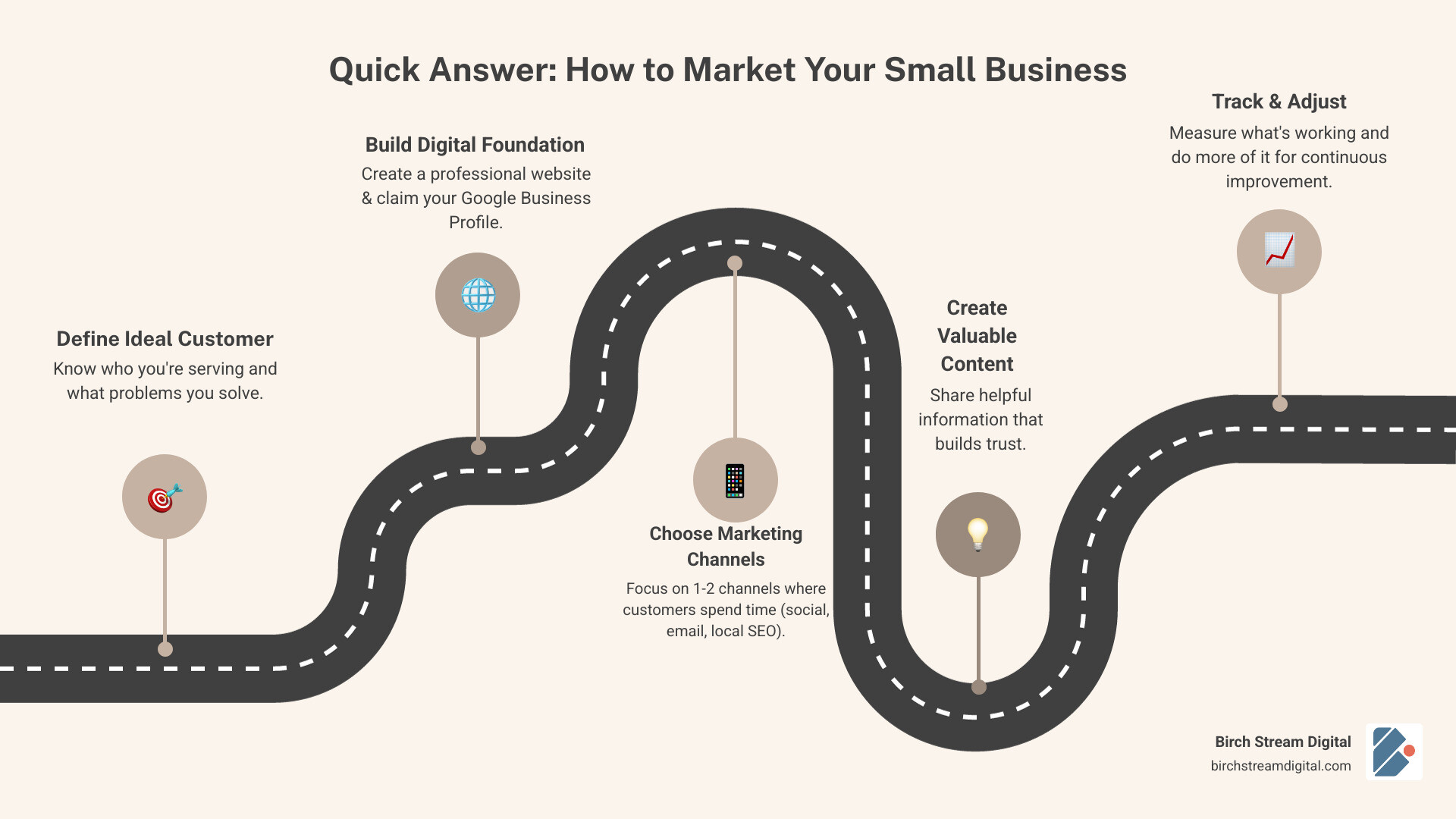
Quick Answer: How to Market Your Small Business
- Define your ideal customer – Know who you’re serving and what problems you solve.
- Build your digital foundation – Create a professional website and claim your Google Business Profile.
- Choose 1-2 marketing channels – Focus on where your customers spend time (social media, email, local SEO).
- Create valuable content – Share helpful information that builds trust.
- Track and adjust – Measure what’s working and do more of it.
According to research, 75% of small businesses have a marketing plan, and those with a structured plan are 6.7 times more likely to report success.
If you’re a small business owner in Winston-Salem, Greensboro, or the Triad, you know getting the word out is essential. But where do you start? Marketing does not have to be complicated or expensive. It just requires focus. Instead of trying every tactic, many businesses build a simple system to attract the right customers.
This guide will walk you through that system step by step. You’ll learn how to lay a solid foundation, build your online presence, and use established strategies that work for local businesses like yours. No jargon, just clear, actionable steps.
I’m Hooman Bahrani of Birch Stream Digital. My work involves helping businesses in the Triad and beyond develop digital marketing systems. This guide shares some common approaches for learning how to market small business.
Let’s get started.
Who This Is For
This guide is for small business owners in Winston-Salem, Greensboro, High Point, and the Triad who want to grow but feel stuck or unsure about marketing. Whether you run a service business, a local shop, or work B2B, these steps will help you build a local presence.
Is This You?
- You are looking for a more structured approach to marketing.
- You want to find new customers on a consistent basis.
- You are not sure if your advertising budget is being used effectively.
- You want to understand how other local businesses build their online presence.
Why This Problem Happens
Most small business owners are experts in their field, not in marketing. With so many options out there, it can be difficult to know where to begin or how to allocate resources effectively.
How This Solves Your Problem
This guide provides a practical, manageable framework. Instead of a long list of tactics, it focuses on how to build a foundation, choose appropriate channels, and measure key metrics. The goal is to provide a clear process for marketing your business.
Laying the Foundation: Before You Spend a Dollar
Before spending on ads, building a marketing strategy is a useful first step. This groundwork helps ensure that marketing efforts are focused and efficient.
Understand Your Market and Your Customer
Marketing to everyone is marketing to no one. The key is understanding exactly who your ideal customer is. When you know their needs and challenges, you can create a message that speaks directly to them.
This starts with market research to gather information about the people you want to serve. From there, you can define your target audience and create a customer persona, which is a fictional profile of your ideal client. This involves grouping customers by shared demographics like location (Winston-Salem, Clemmons), age, or behavior. This focus helps you connect with the right people and not waste resources on those who aren’t interested. You can learn more about identifying your customer base here.
Mini Checklist: Defining Your Ideal Customer
- Who are your best current customers?
- What problems do you solve for them?
- Where do they spend time online?
- What do they value most about your service?
Define Your Unique Selling Proposition (USP) and Brand
Your brand is more than a logo; it’s your reputation and the feeling people get when they interact with your business. Your Unique Selling Proposition (USP) is a clear statement explaining why customers should choose you over anyone else. It’s what makes you stand out in the Triad.
Building your brand identity involves creating a connection with customers. This includes your brand voice, which could be witty, reassuring, or professional. A clear value proposition and consistent message build trust and make you memorable. Always focus on the benefits you offer and how they match what your customers truly value. You can shape your unique value proposition with this helpful guide.
Create Your Simple Marketing Plan and Budget
A marketing plan is your roadmap. It doesn’t need to be a huge document, just a clear outline of your goals, audience, and strategies. A recent study found that businesses with a structured plan are 6.7 times more likely to report success.
Your plan should define your marketing goals using the SMART framework: Specific, Measurable, Attainable, Relevant, and Time-based. For example, aim for “increase website leads by 15% in six months.” This clarity helps you track progress and measure your ROI (Return on Investment) using KPIs (Key Performance Indicators).
Budgeting is also a key component. Some businesses allocate 3-5% of their annual turnover to marketing, but the right amount depends on your specific goals and industry. New businesses in Winston-Salem might need to invest more initially to build a presence. Your budget should cover essentials like your website, SEO, and any advertising. You can download a free template here to get started.
Building Your Digital Presence: Your Online Home Base

Your digital presence is your online storefront. It’s often the first impression a potential customer has of your business, so getting these core assets right is important for growth.
Your Website: The Heart of Your Marketing
Your website is the only online property you truly own and control. It’s your central hub for information and sales, working for you 24/7. According to Salesforce, 99% of marketers will be using their company website as a channel to market to prospects and customers within the next 12 months. It’s where trust begins.
A professional, mobile-friendly design is no longer optional, as many customers in the Triad browse on their phones. A slow or confusing site will turn visitors away. It is also beneficial to make sites accessible and ADA compliant, which is both helpful for users and good for business.
An effective website builds credibility and makes it easy for visitors to take the next step. An approach to Web Design and Redesign often focuses on clear messaging, a smooth user experience, and a site structure that supports business goals.
Get Found Locally with Google Business Profile
For any business serving a local area like the Triad, your Google Business Profile is a very useful free marketing tool. It helps your business appear in Google Maps and local search results, driving both foot traffic and website visits.
When someone in Winston-Salem searches for a local service, an optimized profile helps you show up. Make sure your information is accurate, add engaging photos, and encourage happy customers to leave customer reviews. Always respond to them- good or bad- to show you’re an active business owner. This is a key part of local SEO and can be a contributing factor for new customers. You can set up your Google Business profile here.
Choose and Use Social Media Wisely
You don’t need to be on every social media platform. Trying to do so can spread your resources too thin. Instead, focus on one or two channels where your ideal customers are most active. If your customers are on Facebook and Instagram, start there. If you’re B2B, LinkedIn might be a better fit.
Consistency and genuine engagement matter more than follower count. It’s better to post regularly and respond to comments on one platform than to post sporadically across five. According to NerdWallet, 42% of Americans use social media platforms to find the small businesses they support. Experimenting with short-form video content like Reels and Shorts can also show the personality behind your business.
When you show up consistently, you build visibility and trust.
How to Market Your Small Business with Smart, Low-Cost Strategies
With your foundation in place, it’s time to attract new customers. These strategies are practical, effective, and can grow with your business. Learning how to market small business means being strategic, not just spending more.
Search Engine Optimization (SEO) for Local Businesses
Search Engine Optimization (SEO) helps your business show up higher in Google search results. When someone in Winston-Salem searches for your services, you want to be at the top. The first result on Google gets around 29% of all clicks, making visibility critical.
For local businesses in the Triad, local SEO can be very effective. This means optimizing your site and Google Business Profile with keywords related to your services and location. It is helpful to structure your website content around locally researched keywords. Tools like Yoast SEO can help put this into action.
A content marketing strategy, like helpful blogging and good on-page SEO practices, improves your rankings over time without constantly paying for ads. Information about this topic is available on our page about SEO in Winston Salem.
Nurture Relationships with Email Marketing
Your email list is a valuable asset. Unlike social media, you own your email list, giving you a direct line to people who have shown interest in your business. Email remains customers’ number one preferred channel for company communication, making email marketing important.
Email can be cost-effective for nurturing leads. A common list building strategy is offering a discount on your website for an email sign-up. Once you have a list, personalization is key. Sending targeted newsletters and campaigns with compelling subject lines encourages opens and builds relationships. A free CRM can help you send personalized emails that feel genuine.
Use Paid Ads Effectively
While organic growth is key, paid advertising can deliver results to a targeted audience. Platforms like Google Ads and social media ads let you start with a small budget, test what works, and scale your investment.
Paid search (SEM) boosts your visibility on search results pages for a fee, putting you in front of people actively searching for your services. Services like Paid Search Management are designed to help manage advertising budgets.
Social media ads are also effective for reaching people who fit your customer profile but aren’t actively searching. These ads offer flexible and targeted options. You can start small on platforms like Facebook or Instagram and use retargeting to show ads to people who have already visited your website.
Growing and Scaling: Turning Customers into Advocates

Getting a new customer is a great first step. A component of long-term growth is turning one-time buyers into repeat customers who tell others about your business.
Encourage Word-of-Mouth, Reviews, and Referrals
Who do you trust most when looking for a new service? A friend or family member. This is an example of word-of-mouth marketing. Satisfied customers can become effective marketers.
Actively asking for customer reviews is a common practice. Make it easy for them to leave feedback on your Google Business Profile. Building customer loyalty can happen when you provide a consistently positive customer experience. When they feel valued, they may become repeat buyers and advocates for your business in Winston-Salem.
Consider a simple referral program, like a discount for referring a new client. Also, encourage testimonials and user-generated content, as a customer sharing a photo of your product on social media can help build trust.
Measure, Analyze, and Adjust Your Efforts
Marketing isn’t “set it and forget it.” You need to track your results to understand what’s working. Marketing analytics shows the impact of your efforts.
Tools like Google Analytics are useful. Setting it up provides data on website visitors and their actions, like filling out a contact form. You can create a Google Analytics account to get started. This information can help you make informed decisions.
Regularly reviewing your key performance indicators (KPIs) allows you to focus on what’s effective and stop wasting resources on what’s not. This continuous feedback loop helps you adapt your strategy and work towards a positive return on investment (ROI). This process is important for understanding how to market small business efficiently.
Micro-Framework: 4 Steps to Start Marketing Your Small Business
Figuring out how to market small business effectively can be a challenge. This simple, actionable micro-framework provides a starting point. Think of this as a quick-start guide that offers a clear path to begin building marketing momentum for your business in the Triad. These foundational steps can be applied to most industries.
Here are four simple steps to get you started:
- Define your ideal customer and what makes you unique. Before you do anything else, take a moment to really understand who you’re trying to reach and why they should choose you. This clarity is the bedrock of all effective marketing.
- Set up your website and Google Business Profile. These are your essential online home bases. Your website is where customers learn about you, and your Google Business Profile is how local people find you on Maps and in search results. Get these two pillars strong.
- Choose one social channel and post consistently. Don’t try to be everywhere at once. Pick the one social media platform where your ideal customers hang out the most, and commit to sharing valuable content there regularly. Consistency builds connection.
- Track your results and adjust monthly. Marketing isn’t a one-and-done deal. Make it a habit to check what’s working (and what isn’t) each month. This helps you refine your efforts and focus your time on the things that do.
FAQs
How much should a small business spend on marketing?
A common recommendation is 5-10% of your gross revenue, though this can vary widely by industry and business stage. New or growth-focused businesses might invest more, around 10-15%, to build momentum in the Triad. The key is to start with a comfortable budget and focus on strategies with a measurable return, like a professional website and local SEO. Track your results and adjust your spending based on what works. Strategic spending is more important than the specific amount.
What is the most important marketing activity for a local business?
For a local business in the Triad, claiming and fully optimizing your Google Business Profile is a high-impact first step. It’s free, puts your business on Google Maps, and is often the first place potential customers find you when searching for local services.
A complete profile with accurate hours, good photos, and genuine customer reviews builds instant credibility and signals to Google that you’re a trustworthy business. It can lead to foot traffic and phone calls without any ad spend.
Should I do my own marketing or hire someone?
It can be helpful to handle some marketing yourself at first to understand what works and what your customers respond to. This helps you develop your brand voice. As a business grows, some owners handle daily content while partnering with an agency for more technical work.
How long does it take to see results from marketing?
It depends on the strategy. Paid ads can generate leads within days. SEO and content marketing are long-term investments that typically take 4-6 months to show measurable results. The benefit is that this organic traffic continues without ongoing ad spend. With any strategy, consistency is a key factor for long-term results.
Is it more important to get new customers or keep existing ones?
Both are important, but it’s often more cost-effective to retain an existing customer than to acquire a new one. Satisfied customers may buy again, spend more, and refer others- which is a valuable form of marketing. A loyal customer base creates a stable foundation for your business.
Many small businesses strike a balance. They market to attract new people while also creating a great experience that turns first-time buyers into repeat customers and advocates.
Conclusion: Your Path to Marketing Success
Learning how to market small business can be a challenge, but it does not have to be a complicated journey. The process can be broken down into clear, manageable steps.
By building a foundation, choosing appropriate strategies for your audience, and consistently measuring what works, you can create a marketing process that supports growth. It’s about being strategic, not just busy.
You do not need to do everything at once. Pick one or two ideas from this guide and commit to implementing them. Small, consistent steps can lead to measurable results over time, especially for local businesses in the Triad.
Birch Stream Digital works with businesses in Winston-Salem, Greensboro, and the wider Triad. If you have questions or are looking for a partner to assist with your digital presence, reach out and we can talk through what makes sense for your business.